

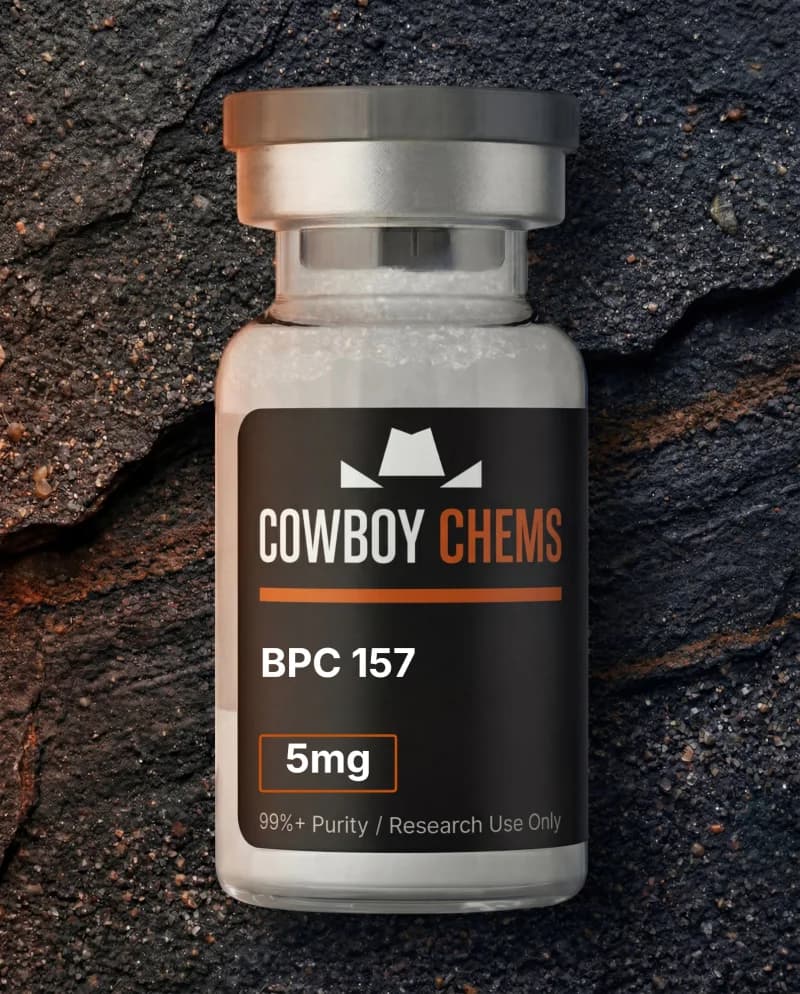
BPC-157
Compliance & Safety Protocol
FOR RESEARCH PURPOSES ONLY. NOT FOR HUMAN USE.
Research Profile
What is BPC-157?
BPC-157 (Body Protection Compound-157) is a synthetic pentadecapeptide derived from a partial sequence of human gastric juice protein. With the molecular formula C₆₂H₉₈N₁₆O₂₂ and a molecular weight of 1419.53 g/mol (CAS: 137525-51-0), BPC-157 consists of 15 amino acids. Published research has characterized its interactions with the nitric oxide system, GABAergic pathways, and dopaminergic systems in preclinical tissue models.
Gly-Glu-Pro-Pro-Pro-Gly-Lys-Pro-Ala-Asp-Asp-Ala-Gly-Leu-ValSpecifications
| CAS Number | 137525-51-0 |
| Molecular Formula | C62H98N16O22 |
| Molecular Weight | 1419.56 g/mol |
| Purity | ≥99% (HPLC verified) |
| Form | Lyophilized powder |
| Storage | -20 °C, lyophilized |
| Shipping | Insulated packaging |
Mechanism of Action
Nitric Oxide Pathway
eNOS/NOS modulationBPC-157 modulates nitric oxide synthase expression and activity, affecting vascular tone and tissue perfusion in preclinical models.
Growth Factor Signaling
VEGF/FGF pathwaysPublished research indicates interactions with vascular endothelial growth factor and fibroblast growth factor signaling cascades in tissue culture studies.
Neurotransmitter Systems
Dopamine/GABA modulationBPC-157 has been shown to influence dopaminergic and GABAergic neurotransmission in neuronal cell culture models.
Storage & Handling
Related Compounds
Research Use Only
All compounds are sold strictly for laboratory research use. Not for human or animal consumption. These products are not drugs, supplements, or food. Statements have not been evaluated by the FDA. Must be 21+ to purchase. This compound is intended exclusively for in vitro laboratory research. Not for human or veterinary use. Not intended to diagnose, treat, cure, or prevent any disease.
Ancillary Compounds

Scientific Context
Related Research & Analysis
BPC-157
Where BPC-157 Sits Among Tissue Repair Research Peptides
BPC-157, TB-500, and GHK-Cu get grouped together as repair-research compounds, but they are structurally unrelated and act on different cellular processes. A map of the category, what separates each mechanism class, and why the grouping is a research-area label rather than a shared mechanism. For research purposes only.
peptides
BPC-157, TB-500, and Epitalon: Origins, Structures, and Research Applications Compared
Three structurally distinct peptides studied in tissue repair and regenerative biology — what makes each one different and what the published science actually shows.